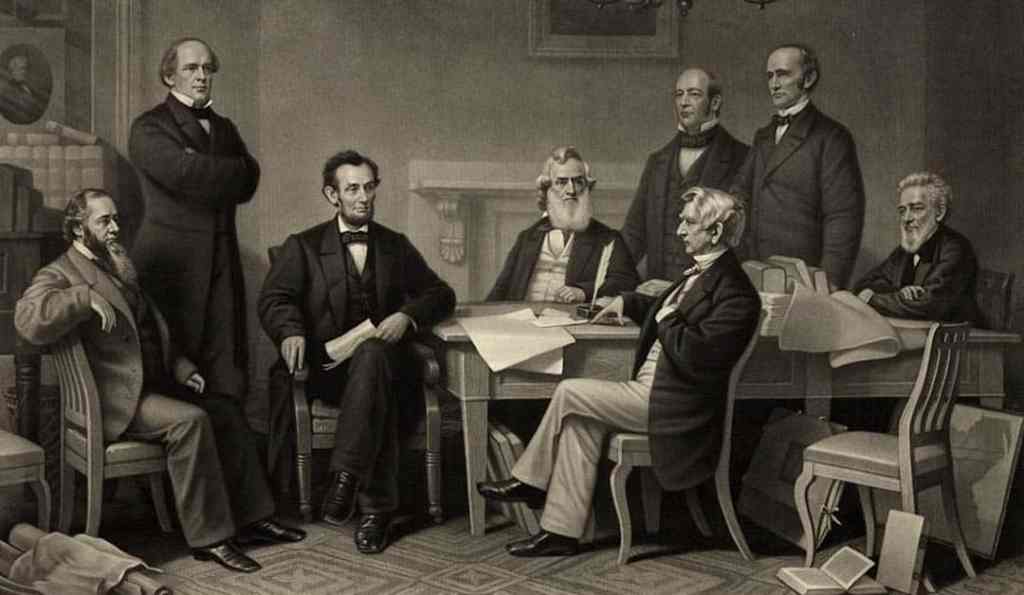
Abraham Lincoln’s delivery of the Emancipation Proclamation in 1863 was preceded by months and months of torment. He experienced a humbling agony in the political, spiritual, and even physical senses. In the time directly leading up to the speech, President Lincoln presented the document to a cohort of trusted advisors and confidants for their review, and naturally he received a variety of responses to the message and the matter. Of his experience in preparing the proclamation, Lincoln wrote the following:
I am approached with the most opposite of opinions and advice, and that by religious men, who are equally certain that they represent the Divine will. I am sure that either the one or the other class is mistaken in that belief, and perhaps in some respects both. I hope it will not be irreverent for me to say that if it is probable that God would reveal His will to others, on a point so connected with my duty [as President], it might be supposed he would reveal it directly to me, for, unless I am more deceived in myself than I often am, it is my earnest desire to know the will of the Providence in this matter.
President Lincoln, often revered as one of the greatest American presidents in history for his leadership and moral integrity, provides here some tremendous insight into our relationship with God and how He chooses to communicate with us. It’s also important to note that in some distant era, the now-seemingly forgotten virtues of faith and fear of God once had a prominent place in the White House.
Revelation is the way we come to know and understand the will of God in our lives and in the lives of those over whom we have spiritual stewardship. Examples of this stewardship include faithful parents for their children or a Bishop for the members in his ward. This principle of stewardship and its accompanying privileges likewise extends into the secular realm in the form of teachers and their students, a chairman for her organization, and as was previously illustrated, a president for the welfare of his country. I believe that if we possess that “earnest desire to know the will of the Providence,” as Lincoln eloquently suggested, we will take the necessary measures to align our lives with correct principles and, in return, be entitled to the direction that best fits the matter at hand. This direction can come from God, no matter the venue or circumstance.
Similar to Honest Abe’s experience, we are often confronted by people and their opinions disguised as inspired direction, and we need to be very careful of that. In this day and age more than any other, the cacophony bombarding our consciences can be crippling and detrimental to our ability to know the will of God for ourselves, or in other words, to receive revelation. The more we learn to better filter information, turn down the noise, control the inputs, and widen the conduit between us and our Heavenly Father, the easier it will be to find that the still small voice though soft and subtle offers clear direction and exactly what we needed all along.
The uncertainty surrounding the social ramifications of the Emancipation Proclamation in the highest point of the American Civil War undoubtedly brought Lincoln to his knees figuratively and literally. Any student of the matter would agree that rarely in the history of our country has so great a moral affliction fallen upon a single person in leadership. The biographer’s pen has documented the countless hours that were spent in silent stupor over what had to be done and what needed to be written. Numberless revisions to the manuscript littered the floor of the President’s office. Surely Lincoln could have used some clarity. But from my own experience and from observing that of many people close to me, I can see that sometimes we are meant to suffer briefly so as to fully appreciate and acknowledge God’s hand in our lives. Whether the matters be big or small, life changing or not, we must learn that the answers don’t always come at our beck and call. The heavens are indeed open, but we often must wait for the clouds to part. Revelation will come, but only according to our patience and our worthiness to receive it. That is a promise that I reiterate and that I choose to believe. But it is our impatience with matters of spiritual communication that also hinders our ability to heed. Surely President Lincoln, in his appointed office, was entitled to the illumination necessary to overcome his challenges. Surely had the much needed direction come sooner some outcomes would have been different. Yet he waited until the time was right and the message was clear. And, if for nothing else, he waited to have the courage to proceed. And what he did took courage and set him on a course to a premature demise. When it seems as though we’ve been forgotten and the moment of truth has arrived, I am telling you that we are very much remembered, and I would only hope that we too have the patience to wait and the courage to act.
I believe in divine direction because I have experienced it at key moments of my life. That being said, I also know revelation is real because I have been left without it, wanting, and recognizing my own impatience. But things will work out. Enslaved people were freed. America survived the Civil War. A young man translated a book and the gospel was restored. The lightbulb was invented. Missionaries fill the world. Everyone you know is accessible with the touch of a button, and so are the scriptures. And though each of these monumental achievements came with some astounding costs, they are evidence of a loving God and His reverent revelations to man. He is speaking to us and He wants us to hear. We just have to know how to listen.
 Dillon Boss