In a recent issue of one of my favorite magazines, the great Harvard professor and happiness scholar Arthur Brooks was interviewed. Among other interesting ideas and tidbits from his life and work, Dr. Brooks shared one insight that really struck a chord (pun intended, as you will soon read).
But first, some background. An important part of Arthur Brooks’ journey through life has been his love of music. He even spent time studying and playing the French horn professionally prior to his career in the academy of social psychology, so he has some credibility and experience when he talks about music. In the context of this interview, where the interviewer asks Dr. Brooks openly first about his research on the topic of happiness and the courses he teaches at Harvard, which segued well into a discussion of faith, having faith, and of others having faith in us, the interviewer asks one additional question, seemingly out of place, but perhaps inspired. He said, What is the best music?
Arthur Brooks responded with the following:
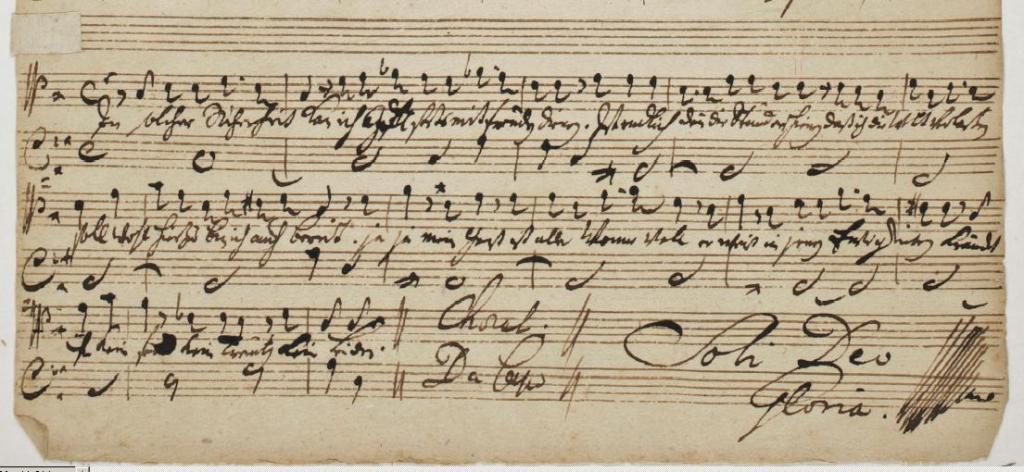
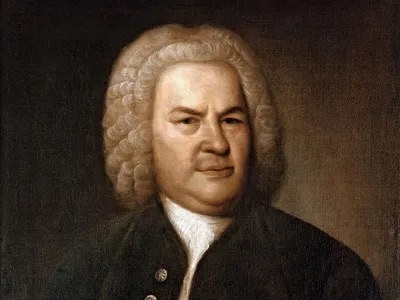
“My favorite composer is Johann Sebastian Bach. He’s sometimes called the fifth evangelist. And the reason is because he was somebody who used music to express his faith in a more effective and penetrating way than probably anybody ever has. He was a very devout Christian. His family Bible was dog-eared, and he was writing in the margins. At the end of every single score of the 1,000 pieces he published, he would write, “to the glory of God” [written Soli Deo Gloria often abbreviated SDG, latin with the same essential meaning]. When asked before the end of his life why he wrote music, he said, ‘The aim and final end of all music should be nothing more than the glory of God and the refreshment of the soul.’
“He knew something about the cosmic nature of how these harmonies affect us. So what’s the best sound? Bach, man, it’s Bach. If I’m going to listen to one thing for the rest of my life, I hope I’m listening to Bach when I pass on.”1
When Dr. Brooks said Bach is the best sound, I have a feeling he meant more than just the sound of music in our ears. I have reason to believe, based on his writings and other sentiments, that Dr. Brooks is a devotedly spiritual and religious person. Therefore, he may have likely meant also that living your life ‘to the glory of God’ is ultimately what produces the finest music, or the finest life. As a secular scholar of happiness speaking outside the classroom, he might also suggest along the same lines that a life of such devotion to the glory of a higher being and purpose is an integral yet often unmentioned aspect of a happy life as well. I certainly would not want to put words in Dr. Brooks’ mouth, but there is a parallel here that I think is illustrated further in his answer to another question.
The interviewer asked, How does the glorification of God inform your life? To which Dr. Brooks responded:
“The most important thing in my life is my Christian faith. And it’s funny because a lot of people, they sort of believe that, but it takes a little bit of focus to say that right? But it’s really true. I grew up in a Christian family. I’m a very lucky man in this way that my parents passed on their faith to me. . . And I married a Catholic girl from a non-practicing family. . . And to us, this is just, fundamental. It’s who we are as people. We raised our kids as Christian people, and they love God a lot. . .and they’re all glorifying God in their own ways. And it’s the most important thing in their life, too. And I’m really, really grateful for that.”2
If every one of us were to first ponder our own degrees of devotion, or the way we live our lives ‘to the glory of God,’ and then ask ourselves the same question, how the glorification of God informs (read directs or helps or makes or enables) our lives, I think we may find beauty. I think we might better comprehend one of the important truths underpinning (whether intended or not) Dr. Brooks’ analogy of the “cosmic nature of how these harmonies affect us.” Yes, Bach’s melodies and all the great odes to deity composed of old can stir our souls. But if we look beyond that, at what Bach and the rest were hoping to accomplish, it was a quest to glorify God and feel that sense of peace, joy, and happiness that inevitably accompanies a life of simple devotion. As Paul promised near the end of his epistle to the Romans:
13 Now the God of hope fill you with all joy and peace in believing, that ye may abound in hope, through the power of the Holy Ghost.
‘To the glory of God.’ The ultimate epitaph. Though I certainly do not ever expect to write a piece of music to the likes of Bach, dedicated so absolutely and powerfully at the end ‘to the glory of God,’ I suppose I would hope to do so in the way I live my life. To think of your mortal existence as a magnum opus, with all the movements and tones and textures, the overtures and ballads, the majors and minors, and at the end, scribbled in your own hand “to the glory of God‘… That is an epic. A true masterwork.
If I’m going to listen to one thing for the rest of my life, I hope I’m listening to that when I pass on.
References
- Doug Wilks, “The professor of happiness: Arthur Brooks on the secret of contentment,” Deseret Magazine, March 22, 2023, https://www.deseret.com/2023/2/27/23591623/arthur-brooks-interview
- Ibid.
 Dillon Boss