As a young missionary in Chile, there was one Sunday early on when an Area Seventy visited our branch and spoke in sacrament meeting. I was able to recall the experience in my old journal:
Sunday, September 23, 2012
Tierras Blancas, Coquimbo, Chile
[Today] was mostly a normal day, but we had an Area Seventy visiting the branch who gave a talk that was awesome. He said a lot of great things, but there was one thing in particular that I want to remember. [He] talked about the sacrament in a way I had never really considered before. He invited us to think about the importance of our being present in a sacrament meeting. . . and talked a lot about the significance of the sacrament prayers. Obviously, we make a covenant when we are baptized, but I think that many people forget what that covenant actually is. When we are in our seats when the meeting starts, we can prepare ourselves by listening to the prelude music, singing hymns, and when it is time to partake of the sacrament, listening intently to the prayers and saying ‘amen’ with the rest of the congregation. What is the significance of being present and able to say ‘amen’? The Seventy reminded us that part of the baptismal covenant is stated in the sacrament prayers, and when we say ‘amen,’ we are verbally committing to live that covenant again. Because of this, it is important that we are in the chapel and present to say ‘amen’ and renew our covenants. He said that ‘amen’ is like our vote, and that is really important.1
In full disclosure, this Area Seventy shared these comments in direct response to a major problem we had in the Tierras Blancas branch with people being late for sacrament meeting and taking the sacrament in the foyer instead of in the chapel. He actually went as far as to say that by not being present in the chapel for the sacrament prayers, the sacrament didn’t have an effect in your life and your covenants are not actually renewed. There is no doctrinal basis for that idea and I reject it fundamentally. Nevertheless, the better part of his point that day informs an important principle I would like to reiterate.
Why is ‘amen’ a thing? What is the significance of that word? What if that Area Seventy’s teachings about the importance of saying ‘amen’ are true? What if it really can signify a type of vote or a verbal demonstration of our commitment to the promises we have made with God?
In the Latter-day Saint Bible Dictionary, the word ‘amen’ is defined as “Firm, true. The word is used to denote acceptance (Deuteronomy 27:15–26) or truthfulness (1 Kings 1:36). Amen was the proper response of a person to whom an oath was administered (1 Chronicles 16:36; Nehemiah 5:13; 8:6). Christ is called ‘the Amen, the faithful and true witness’ (Revelation 3:14; see also John 14:6; 1 Corinthians 14:16; 2 Corinthians 1:20).”2
In the Latter-day Saint Guide to the Scriptures, we likewise learn that ‘amen’ “means ‘may it be so’ or ‘so it is.’ Amen is said to show hearty or solemn acceptance and agreement or truthfulness. Today at the end of prayers, testimonies, and talks, those who heard the prayer or message say an audible amen to indicate agreement and acceptance. In Old Testament times, a person was to say amen when making an oath. Amen also served as the token of a covenant in the School of the Prophets (D&C 88:133–135).”3
I suddenly want to say ‘amen’ more.
I chuckle inside when, after a general conference talk, I hear a hearty ‘AMEN’ from someone within range of the pulpit microphone. I want my audible ‘amen’ to be heard following a prayer of supplication or an inspired message. I understand with even more solidarity now the almost signatory declaration implied in scripture when a prophet or scribe concludes their writing with ‘amen’ (see 1 Nephi 14:30 or Helaman 12:26). I recall the emotion I felt at the recent dedication of my local temple, where during the Hosanna Shout, all in attendance sounded a jubilant “Amen, amen, and amen!” to solemnize the dedication. There was also the very rare instance of President Russell M. Nelson inviting all to participate in a special Hosanna Shout after reading the latest proclamation commemorating the 200th anniversary of the restoration of the gospel at the April 2020 General Conference.4 I appreciate it all the more now when the lyrics of a sacred hymn end with a solemn ‘amen.’ Perhaps there are other impactful uses of ‘amen’ you can remember in your life. The context and application of these instances and the significance surrounding them is what I like to call the spirit of amen.
The spirit of amen, as I see it, is a way of living. It’s a way of aligning ourselves with God, His chosen servants, and other fellow disciples of Jesus Christ as we “[hold] fast to the rod of iron” (see 1 Nephi 8:30). When we say ‘amen,’ we are agreeing with what was taught, shared, or said. As long as someone speaks truth, our collective ‘amens’ certify the presence of the Holy Ghost as He bears witness and leaves us fulfilled knowing we contributed our support. We can come away confident in the truth of the messages of the gospel. When we think of it that way, being present in a meeting as active participants in the teaching of truth and bearing witness in tandem with the Holy Ghost seem like a pretty big deal. It makes me want to go to sacrament meeting and pay attention to what is being taught.
There are many other meaningful utterances we encounter in life. For example, it is important that in a wedding ceremony, the bride and groom, after exchanging vows and upon the signal of the officiator, say ‘I do’ when asked if they take the other as their legal and lawful companion. There is significance, even if only for tradition, in the saying of the words ‘I do’ in this context. When a government official is ‘sworn in’ to their particular office, specific words and oaths are repeated that certify their commitment to core values. If you happen to be seated in the emergency exit rows on an aircraft, the flight attendant will explain what it means to sit in that section and what you are supposed to do in the event of an evacuation. In exchange for the additional leg room during your flight, the flight attendant needs a verbal confirmation that you understand the terms. There are many other instances of these types of arrangements. Our ability to confirm, verify, and uphold our approval is important.
Similarly, raising our right hand to sustain proposals, callings, ordinations, fellowshipping new members, and other changes as they come up in the Church is a personal demonstration of approval and support. If a newly-called individual is presented before the congregation for a sustaining vote, by signifying you are agreeing to support them in their ministry. When you say ‘amen,’ you are likewise offering your support — willing to bear witness of what was said. More importantly, I submit that you are agreeing to do something with what you heard. In other words, offering a verbal ‘amen’ to a prayer, testimony, or talk means that you will make a special effort to do what you were invited to do. If the temple and family history leader of your ward invites you to spend some time learning family stories, indexing, or preparing family names to take to the temple and you say ‘amen,’ if you choose to take your word seriously, you should be making a special effort to do those things. Don’t misunderstand: The spirit of amen is not about deciding what to say ‘amen’ after based on what you are and are not willing to do. Rather, the spirit of amen is about being more conscientious of your commitments and the support you offer to others. Like the Seventy I heard in Chile all those years ago said, the spirit of amen in the context of the sacrament prayers is wanting to show God in a personal, meaningful way that we are committed to trying a little harder. This must have some significance.
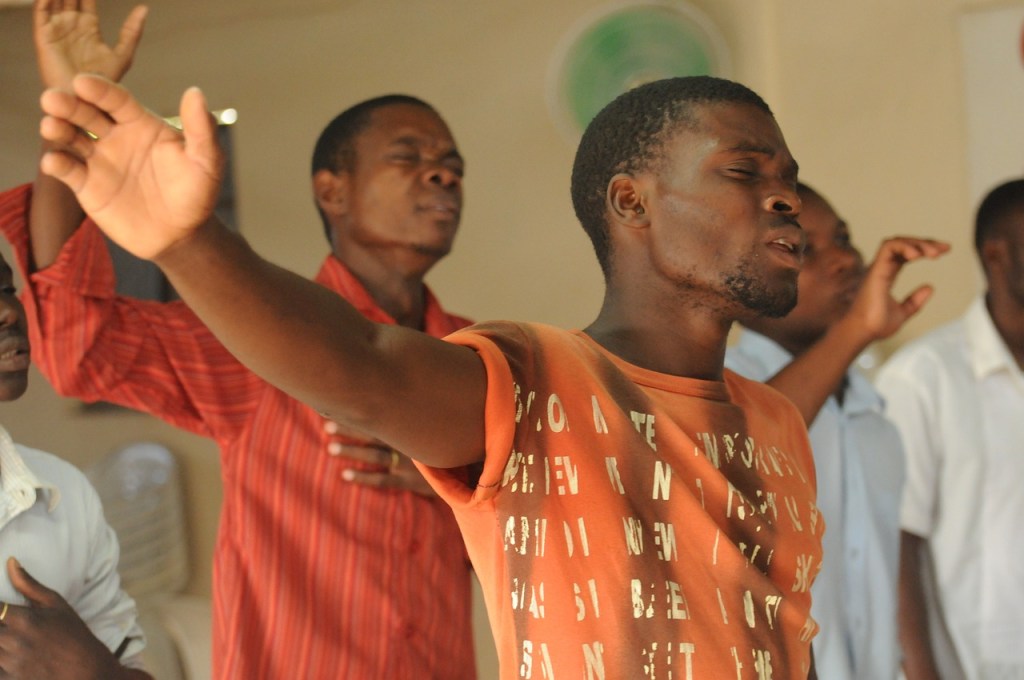
The spirit of amen can also unify us. I think there is a lot of solidarity in a hearty ‘amen’ at the end of a sermon or prayer. The very fact that the single speaker-large audience delivery method endures is remarkable given our short attention spans and general lack of regard for the thoughts and ideas of others (I blame smartphones and social media), but as we all listen and pay attention to a spiritual message that someone put effort into preparing and delivering, and it is true, offering your voice to the ‘amen’ chorus helps you feel part of something. “Can I get an amen?” a stereotypical pastor might ask his parishioners. He’s looking for approval. He’s looking to unify the congregation around a central idea or point he is trying to make. He’s trying to get some commitment from the people. “Amen” they reply in a scattered fashion. Some might shout it. Some say it intermittently without any prompt at all. This is the spirit of amen — life of alignment, conscientiousness, unity, and significance.
If you go through the motions or are out of the habit entirely, take a moment next time you have the chance and think about what your ‘amen’ means. And when the preacher’s done preaching or the prayer’s done praying, if you find yourself witnessing truth with the Holy Ghost along with a handful of your brothers and sisters in the gospel, consider lifting your voice with a little zeal and saying, ‘amen!’
 Dillon Boss