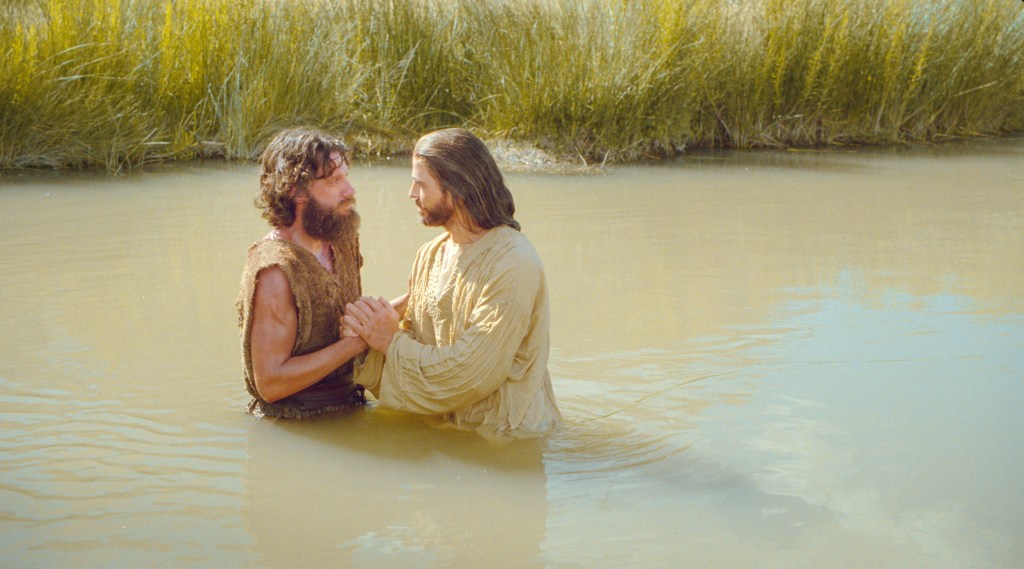
Our ward recently scheduled some time at the temple to take the youth to perform ancestral baptisms. With a small youth program as it is, and one key family out of town, we only had one young man show up — a lone deacon. The week prior, we had been to the Family Discovery Experience at our local FamilySearch center, so there was a bundle of names to be done. I figured we’d find a way to do the baptisms one way or another, so we all piled in the ol’ Corolla and made the 4-minute trek to the temple; three leaders and one youth.
Upon arriving, it was clear that the temple had prepared for a larger group. When we only showed up with one, they seemed underwhelmed. It’s okay, I thought. It’s always worth it. We three leaders played Rock Paper Scissors to determine who would get dressed to do the baptizing, and the other two would stand in as witnesses. My lot was the latter, so I made my way into the baptismal area to wait for the others to change before we took our turn at the font.
An ordinance worker had told me that we would be limited to only four names per person being baptized. Since I had 14-or-so names in my envelope, I began to strategize how we might be able to get them all done with only one youth and one leader dressed for baptizing. I mentioned the same to another ordinance worker standing nearby, but she seemed unfazed. It’s okay, I thought. I took my seat and kept thinking.
I noticed what appeared to be a family at the font. There was a mom standing in as witness, a young woman being baptized who appeared to be about twelve or thirteen, and another younger-looking man performing the baptisms. Typically, the temple has an ordinance worker on hand to perform baptisms in the event that a group doesn’t have an eligible priesthood holder in their party, so I was trying to gauge the older kid’s position as either an ordinance worker or the young woman’s older brother. Either way, my thought was that I could potentially recruit the kid to help baptize the leader we had brought before that leader would baptize our deacon. That would allow us to knock out at least a few more of the names we had brought while still operating under the four-name constraint. When they appeared to be wrapping up, I approached the font.
“Are you the baptizer?” I asked the young man as he stood waist-deep in the water. He looked at me puzzled. “I mean, are you an ordinance worker?” He understood that time and told me that he was. Just then, the ordinance worker I had talked to previously about doing more than just four names came over and told me that it would be okay since no one was behind us. That solved the issue. Our leader would baptize our deacon fourteen times. So the baptizer exited the font and our people went in. That was the end of the encounter, but it got me thinking.
There was serious significance in the initial question I asked the young man in the baptismal font: Are you the baptizer? Indeed, he was. In that moment, I could not think of a more impressive designation than “baptizer.” A worthy young man, ordained to a priesthood office, with power and authority from God to baptize in His name. The young man didn’t quite understand me at first, not for lack of understanding, but because he was likely just caught off-guard by the question. But I knew. In that moment, the Spirit bore witness to me that he was a baptizer, that priesthood authority is restored, and that baptism as the first ordinance of the Gospel of Jesus Christ is “the gate by which ye should enter.”1 As I witnessed the leader proceed to baptize our deacon fourteen times in a row, I basked in this truth. It was a glorious experience in the temple.
Season 4 of The Chosen recently became available to stream for free in a staggered release on the Angel Studios app. An underlying plot point in the first episode of the season is the decree and execution of John the Baptist. As always with The Chosen, it is impeccably portrayed. Previous seasons showed bits of the relationship that Jesus and John had — from their mothers’ wombs until John’s incarceration. But this episode was especially poignant when Jesus appears to perceive, even feel in the very moment when John was beheaded. When a messenger finds Jesus in the woods to deliver the news, Jesus is overcome with emotion and proceeds to rend his shirt — the traditional Jewish kriah display of profound grief and a broken heart. Jesus loved John the Baptist deeply and fraternally. The scriptures confirm this.
27 This is he, of whom it is written, Behold, I send my messenger before thy face, which shall prepare thy way before thee.
28 For I say unto you, Among those that are born of women there is not a greater prophet than John the Baptist….2
35 He was a burning and a shining light: and ye were willing for a season to rejoice in his light.3
John the Baptist is a character of paramount importance in the New Testament. He was the literal fulfillment of prophesy, the end of the era of the prophets, and some even confused Jesus for him after his death. As a young missionary in Chile, I would bring up John the Baptist daily as we taught about the importance of baptism by one holding proper priesthood authority and the significance of Jesus coming to him to be baptized. I even carried a pocket-sized image of Christ’s baptism to show people as we taught.
13 Then cometh Jesus from Galilee to Jordan unto John, to be baptized of him.
14 But John forbad him, saying, I have need to be baptized of thee, and comest thou to me?
15 And Jesus answering said unto him, Suffer it to be so now: for thus it becometh us to fulfil all righteousness. Then he suffered him.
16 And Jesus, when he was baptized, went up straightway out of the water: and, lo, the heavens were opened unto him, and he saw the Spirit of God descending like a dove, and lighting upon him:
17 And lo a voice from heaven, saying, This is my beloved Son, in whom I am well pleased.4
Jesus and John together (since he deliberately says “us”) fulfilling “all righteousness” has always resonated with me. We can probably come up with lots of different ways to interpret “all righteousness.” But for my purposes here, let’s say that part of the righteousness fulfilled was baptism by proper authority, by immersion, to covenant with the Father. John the Baptist was the baptizer. It was his prophetic mission to be so, and Christ’s coming to him, not anyone else, was the fulfillment.
The prophet Joseph Smith wrote in his own account:
68 We still continued the work of translation, when, in the ensuing month (May, 1829), we on a certain day went into the woods to pray and inquire of the Lord respecting baptism for the remission of sins, that we found mentioned in the translation of the plates. While we were thus employed, praying and calling upon the Lord, a messenger from heaven descended in a cloud of light, and having laid his hands upon us, he ordained us, saying:
69 Upon you my fellow servants, in the name of Messiah, I confer the Priesthood of Aaron, which holds the keys of the ministering of angels, and of the gospel of repentance, and of baptism by immersion for the remission of sins; and this shall never be taken again from the earth until the sons of Levi do offer again an offering unto the Lord in righteousness.
70 He said this Aaronic Priesthood had not the power of laying on hands for the gift of the Holy Ghost, but that this should be conferred on us hereafter; and he commanded us to go and be baptized, and gave us directions that I should baptize Oliver Cowdery, and that afterwards he should baptize me.
71 Accordingly we went and were baptized. I baptized him first, and afterwards he baptized me—after which I laid my hands upon his head and ordained him to the Aaronic Priesthood, and afterwards he laid his hands on me and ordained me to the same Priesthood—for so we were commanded.
72 The messenger who visited us on this occasion and conferred this Priesthood upon us, said that his name was John, the same that is called John the Baptist in the New Testament, and that he acted under the direction of Peter, James and John, who held the keys of the Priesthood of Melchizedek, which Priesthood, he said, would in due time be conferred on us, and that I should be called the first Elder of the Church, and he (Oliver Cowdery) the second. It was on the fifteenth day of May, 1829, that we were ordained under the hand of this messenger, and baptized.5
In what I like to think of as a worthy reprisal to the continuing fulfillment of all righteousness, John the Baptist, from the presence of the Father, restored the keys of the priesthood of Aaron through Joseph Smith, effectively initiating the ushering in of additional powers and blessings that continue today on full display. Joseph Smith baptized Oliver Cowdery and Oliver baptized Joseph. Joseph was a baptizer. Oliver was a baptizer. Nearly two hundred years later, that young ordinance worker in the temple is a baptizer. The good leader we brought with us to the temple that day is a baptizer. My older brother was a baptizer when he baptized me when I came of age. Though unworthy most of the time, I too am a baptizer.
In the end, however, it’s not about us. The truth is that a loving Father in Heaven and our Savior Jesus Christ, the architects of our salvation, together with the Holy Ghost, are the baptizers. Everything points us to Jesus Christ, and Jesus always points us to the Father. Only through Christ’s atonement is the power of repentance made possible, and only through Christ do we enter the covenant path that leads us back to God. John taught the same, with which I will end:
11 I indeed baptize you with water unto repentance: but he that cometh after me is mightier than I, whose shoes I am not worthy to bear: he shall baptize you with the Holy Ghost, and with fire….
References
- 2 Nephi 31:17
- Luke 7:27-28
- John 5:35
- Matthew 3:13-17
- Joseph Smith—History 1:68-72
- Matthew 3:11
 Dillon Boss