This post was originally published on March 16, 2016. This is a revised and updated version.
In The Church of Jesus Christ of Latter-day Saints, numbers are used to organize and classify essentially every single entity. Everything from office extension numbers to bank account numbers to product deliverable numbers to each individual member’s 11-digit membership record number. The most complex of processes are made easier if you know the right numbers. Some of the important numbers that are used regularly are those of all the worldwide geographic subdivisions of the Church known as stakes, missions, districts, wards, and branches. In Church administration we call these units and each unit has a unit number. Each unit number (usually between 3 and 7 digits) carries with it a lot of information. Unit numbers ensure that every unit is accounted for from the largest stakes in Utah to the tiniest branches in Paraguay. Every unit has a number.
There are more units in the church than I can even count. This is a good thing. I can tell you firsthand that units are being divided, consolidated, and realigned constantly to accommodate the needs of a growing Church across the world. That, you can imagine, requires a lot of numbers. Though the Church is able to stay so well organized while keeping track of all the individual units wherever they may be, there is one type of unit that does not receive nor require a number. This unit is the family. And the family is the fundamental unit not only of the Church but of society in general.
God created families in order to provide an environment here on earth in which we could feel and show love, give and receive support, and learn and teach essential skills that prepare us for Eternal Life. That is not an official Church explanation, but it’s mine and it works for me. The past, current, and future Church depends on righteous family units to carry the work forward. Within the bonds of home-centered, Church supported, and gospel-oriented family, our children develop testimonies of Jesus Christ, learn to give meaningful service and show kindness to others, are shepherded to the temple to make sacred covenants, prepare to serve full-time missions, and become leaders that make their discipleship the biggest priority in their lives. Without righteous families, the work and glory of God become increasingly more difficult to bring to pass.1
In an episode of the Pioneers in Every Land series published by The Church of Jesus Christ of Latter-day Saints, the story is told of how the government in Ghana put a “freeze” on Church activity and prevented worship services in all Latter-day Saint meetinghouses for over 18 months. This caused the members to have to stay in their homes and bravely continue their church activity amongst themselves despite the strict federal prohibition.
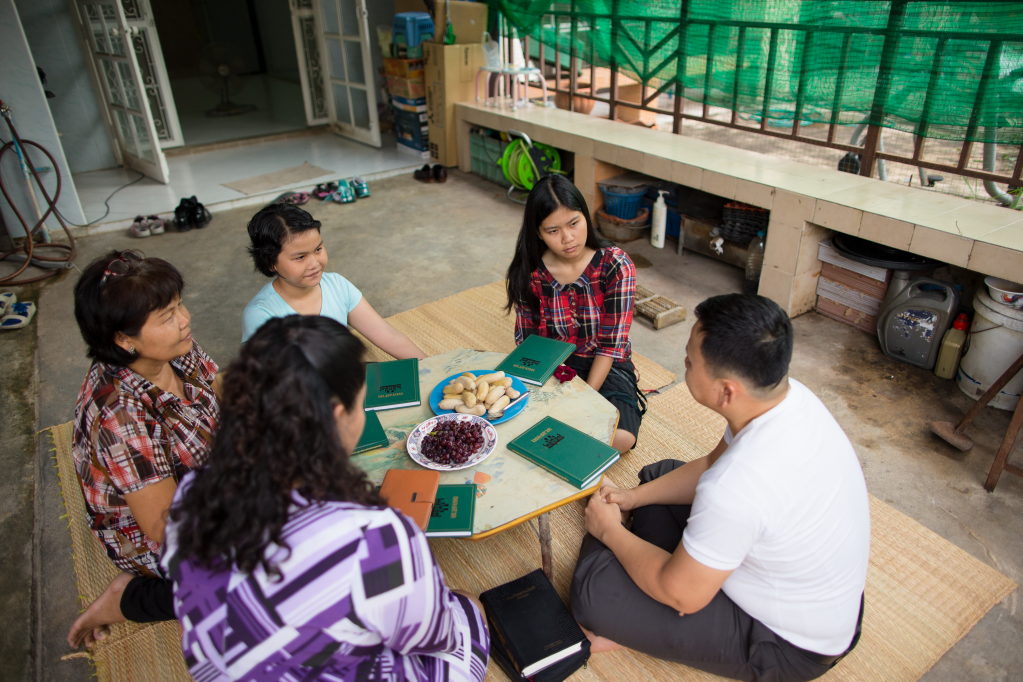
My favorite line from another version of the segment not currently published, and the inspiration for this thought, is when a Brother Andam said, “The family is a unit of the Church, and can operate when authorized.” This really struck a chord with me, because I have spent years of my career working in consideration of units and numbers and money and members and all of the things that make the Church run, yet in all reality the true units of the Church, the centers from which all gospel progression really originates, are families and the homes where families are found. And yes, they do operate. God has “authorized” them since the beginning. Additionally, our homes can and should become spiritual sanctuaries in which we could partake of the sacrament and feel the spirit as if at church.
“During the freeze, our living room became the sacrament hall” remembers William Acquah. “I prepared the sacrament and blessed it [for] my young family.” Does this sound familiar? In March 2020, as the world shut down at the height of the global COVID-19 pandemic, members of the Church around the world were again authorized to partake of the sacrament in their homes and study the scriptures together in whatever “sacrament meeting” fashion that was appropriate. I too prepared the sacrament and blessed it for just my wife and I at the time, and I was once again reminded of the importance of the family unit. Additionally, not long before the pandemic, the Church had introduced the Come, Follow Me curriculum, which provides a framework for home and personal study unlike any approach to gospel study published by the Church has done before. Despite the challenges and struggles that accompanied the pandemic, I sensed we were well prepared to carry on at home, much like our brothers and sisters in Ghana did during the freeze back in 1989.
God organized families for us to truly centralize our own personal ministries. The most essential skills for building lasting relationships are developed and exercised within the walls of a harmonious home. If the very definition of “unit” involves togetherness and oneness, what are we doing to truly build family UNITy? We should remember often how God feels about families and the role they play in His plan. The family really is the most important and fundamental unit of the Church, even without a number.
References
- Moses 1:39
 Dillon Boss